
Willkommensbonus im Platincasino
Auch das Platincasino kommt nicht ohne attraktiven Willkommensbonus aus. Aktuell kannst Du als neuer Spieler ein Bonuspaket von bis zu 2000€ und 200 Freispielen erhalten. Das Bonuspaket erstreckt sich über 4 Einzahlungen. Auf die erste Einzahlung von bis zu 500€ bekommst Du einen 100% Bonus. Zusätzlich erwarten Dich noch 200 Freispiele für den Slot Book of the Fallen. Die 200 Freispiele – für die eine Mindesteinzahlung von 20€ vorgenommen werden muss – werden Dir in je 4 50er Blöcken freigeschaltet. Das bedeutet, am Tag Deiner Einzahlung werden 50 Freispiele freigeschaltet und auf den drei folgenden Tagen folgen jeweils 50 Freispiele.
Damit du dir den Platincasino Bonus wieder auszahlen lassen kannst, musst du deine Einzahlung und den Bonus 40-fach umsetzen.

Das Willkommensbonus-Paket beinhaltet aber noch mehr! Auf Deine zweite Einzahlung im Platincasino bekommst Du ebenfalls einen 100% Bonus auf eine Einzahlung bis zu 500€. Die Umsatzbedinungen sind wie bei der ersten Einzahlung. Auf die dritte Einzahlung bekommst Du zusätzlich noch einen 50% Bonus bis zu 500€ und bei der vierten Einzahlung ebenfalls.
Angebote für Bestandskunden
Auch treue Spieler im Platincasino profitieren von Bonusangeboten. Jeden Donnerstag gibt es aktuell einen Reload-Bonus! Hier kannst Du mit dem Bonuscode „THURSDAY“ einen 50% Bonus bis zu 250€ erhalten. Die Mindesteinzahlung zum Erhalt des Angebotes sind 20€. Allerdings sind die Bedinungen für die Auszahlung recht sportlich. Für die 40-fache Umsetzung bleiben Dir lediglich 24 Stunden.

Sonntags kannst Du Dich im Platincasino auf einen Freispiele-Bonus freuen. Mit dem Bonuscode „SUNDAY“ bekommst Du bei einer Einzahlung von 20€ 20 Freispiele freigeschaltet. Zahlst Du 50€ ein sind es 70 Freispiele und für eine 100€ Einzahlung sind es dann 200 Freispiele. Aber auch hier wird es sportlich. Das Bonusguthaben aus den Freispielen bleibt 24 Stunden gültig und muss für eine Auszahlung 40x umgesetzt werden.
Das Treueprogramm im Platincasino – der Platinclub
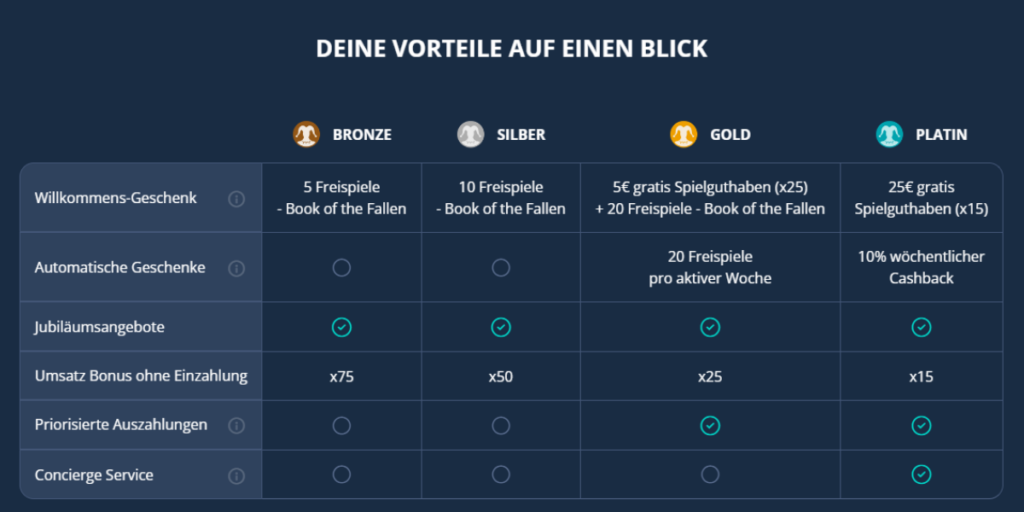
Beim Platinclub handelt es sich um das VIP-Treueprogramm für Bestandskunden im Platincasino. Dieser bringt treuen Spieler eine Menge Vorteile. Dieses 5-stufige Treueprogramm weiß die Bestandskunden mit verschiedenen Extras zu überraschen. Mit deinen Spieleinsätzen kannst du deinen Status bzw. die jeweilige Stufe erhöhen. Hier beziehen sich die Extras nicht nur auf Bonusangebote oder Freispiele, sondern auch auf priorisierte Auszahlungen, Verringerung der Umsatzbedingungen oder längere Supportzeiten.
Vorteile des Treueprogramms
Beim Spielen im Platincasino sammelst du automatisch sogenannte PlatinCoins, wobei die VIP-Stufe auch hier eine wichtige Rolle spielt: Je höher dein Spielerstatus, umso weniger musst du für einen PlatinCoin einzahlen.
Hast du eine bestimmte Anzahl an PlatinCoins gesammelt, kannst du diese gegen Boni, Freispiele und weitere Prämien im Rewards Carnival Shop eintauschen. Somit profitierst du doppelt vom Spielen im Platincasino: Zum einen spielst du und genießt das große Spielvergnügen und zum anderen sammelst du gleichzeitig Treuepunkte, die du später gegen verschiedene Prämien eintauschen kannst.
Wie werde ich Mitglied?
Obwohl es sich um keinen echten Einzahlungsbonus handelt, wirst du automatisch nach deiner ersten getätigten Einzahlung zum Teil des Platinclubs. Demzufolge musst du dich zuerst im Platincasino anmelden, die erste Einzahlung tätigen, um automatisch den Spielerstatus Bronze zu bekommen. Danach liegt es an dir, ob du noch weiter aufsteigst und wie viele Vorteile du aus dem Platinclub ziehst. Je höher der Spielerstatus, umso größere Prämien können abgeräumt werden bzw. die gesammelten PlatinCoins können gegen Preise getauscht werden.