
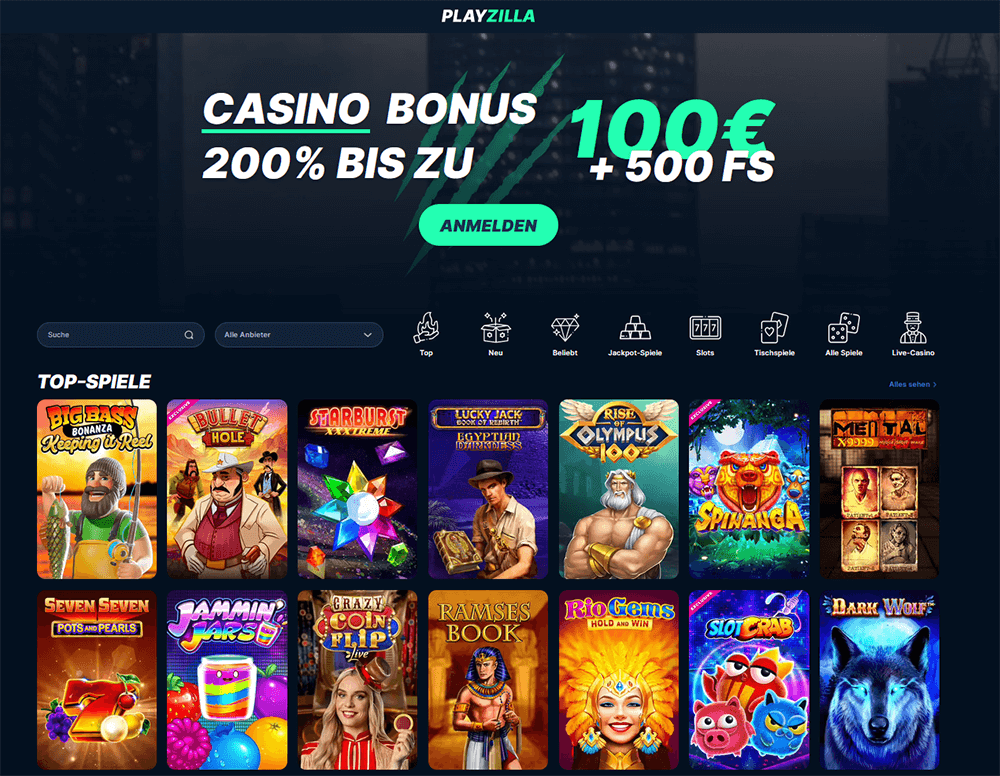

Wenn es um Boni geht, hat Playzilla einiges zu bieten. Für den Anfang bietet das Playzilla Casino dir einen großzügigen Willkommensbonus von bis zu 100 Euro plus 500 Freispiele an. Falls dein Interesse eher den Sportwetten gilt, bietet dir Playzilla einen gesonderten Bonus von 150% bis zu 150€.

Auch als bestehender Spieler kannst du von wöchentlichen Boni und Aktionen profitieren. Zum Beispiel gibt es regelmäßig Freispiele, Cashbacks und Reload-Boni.
Neukunden:
| Art | Bonus |
|---|---|
| Casino Willkommensbonus | 200% bis zu 100€ + 500 Freispiele |
| Sport Willkommensbonus | 100% bis zu 100€ |
Bestandskunden:
| Art | Bonus |
|---|---|
| Wöchtenlicher Reload Bonus | 200% bis zu 100€ + 50 Freispiele |
| Reload Bonus am Wochenende | 50% bis zu 700€ + 50 Freispiele |
| Wöchentlicher Cashback | 8% bis zu 1000€ |
| Live Cashback | 25% bis zu 200€ |
| Wöchentliches Turnier | 9000€ Preispool |
Wie sind die Bonusbedingungen bei Playzilla?
Wie bei den meisten Online-Casinos unterliegen auch die Bonusangebote bei Playzilla Bedingungen, die vor der Inanspruchnahme beachtet werden sollten. Zunächst gilt, dass der Willkommensbonus sowie alle anderen Einzahlungsboni an eine Mindestumsatzanforderung gebunden sind. In der Regel müssen Spieler den Bonusbetrag 35x umsetzen, bevor eine Auszahlung möglich ist. Auch die Freispiele sind an Umsatzbedingungen gebunden, wobei Gewinne aus den Freispielen ebenfalls umgesetzt werden müssen. Zudem gibt es meist eine maximale Einsatzhöhe pro Spielrunde, die nicht überschritten werden darf, solange ein Bonus aktiv ist. Darüber hinaus müssen die Bonusbedingungen innerhalb eines bestimmten Zeitraums erfüllt werden, normalerweise innerhalb von 10 Tagen.
Die Bonusbedingungen im Überblick
- Der Mindesteinzahlungsbetrag für die Boni liegt bei 10 €
- Der Bonus muss 35-Mal umgesetzt werden, um ihn auszahlen zu können
- Der Bonus ist für 10 Tage gültig
- Die Freispiele werden in den ersten 10 Tagen nach der Einzahlung gutgeschrieben
- Die Freispiele sind jeweils 24h gültig
- Gewinne aus Freispielen müssen 40-Mal umgesetzt werden
- Spielen mit Bonus ist nicht mit Jackpot-Spielen möglich
Beachte bitte, dass nicht alle Spiele in gleichem Maße zu den Umsatzbedingungen beitragen:
- Spielautomaten – 100 %
- Video Poker – 10 %
- Alle Karten- und Tischspiele – 10 %
- Alle Live-Spiele – 10 %
Weitere Informationen hierzu findest du in den AGB des Anbieters.

Playzilla überzeugt mit einer beeindruckenden Auswahl an Casinospielen und gehört mit über 9.000 verfügbaren Titeln zu den größten Anbietern im deutschsprachigen Raum. Die Plattform deckt alle wichtigen Spielkategorien ab – von Klassikern bis hin zu modernen Innovationen.
Spielautomaten (Slots)
Mit mehr als 7.500 Slot-Games erwartet dich eine riesige Vielfalt: klassische Früchteslots, moderne Video-Slots, Megaways, Jackpots und thematisch gestaltete Automaten.
Beliebte Titel wie:
- Starburst
- Book of Dead
- Book of Ra
- Gonzo’s Quest Megaways
Diese Spielautomaten sorgen für Spielspaß mit hoher Wiederkehrrate.
Jackpot-Slots
In der eigenen Jackpot-Kategorie warten über 300 Spiele mit festen oder progressiven Gewinnchancen. Ob Divine Fortune, Hall of Gods oder Mega Joker – hier hast du die Chance auf besonders hohe Auszahlungen.
Tisch- und Kartenspiele
Roulette, Blackjack, Poker und Co. – über 190 Varianten garantieren Spannung für Strategie-Fans. Klassiker wie European Roulette, Classic Blackjack oder Casino Hold’em sind ebenso vertreten wie Varianten für Fortgeschrittene.
Live-Casino
Das Live-Casino bei Playzilla wird von renommierten Anbietern wie Evolution Gaming oder Pragmatic Play Live betrieben. An über 350 Tischen triffst du auf echte Dealer und kannst Spiele wie Lightning Roulette, Crazy Time oder Speed Blackjack in Echtzeit erleben.
Sportwetten & Virtueller Sport
Neben Casino-Spielen bietet Playzilla auch eine umfangreiche Sportwetten-Plattform mit Live-Wetten auf Fußball, Tennis, eSports und mehr. Virtuelle Sportarten runden das Angebot ab.
Weitere Spiele
Auch Fans von Keno, Bingo, Rubbellosen oder virtuellen Spielen kommen auf ihre Kosten. Zudem findest du regelmäßig exklusive Events oder saisonale Specials.
