
Jahrelange Erfahrung und eine ständig wachsende Community. Das zeichnet das Platincasino aus.
Willkommensbonus im Platincasino
Auch das Platincasino kommt nicht ohne attraktiven Willkommensbonus aus. Aktuell kannst Du als neuer Spieler ein Bonuspaket von bis zu 2000€ und 200 Freispielen erhalten. Das Bonuspaket erstreckt sich über 4 Einzahlungen. Auf die erste Einzahlung von bis zu 500€ bekommst Du einen 100% Bonus. Zusätzlich erwarten Dich noch 200 Freispiele für den Slot Book of the Fallen. Die 200 Freispiele – für die eine Mindesteinzahlung von 20€ vorgenommen werden muss – werden Dir in je 4 50er Blöcken freigeschaltet. Das bedeutet, am Tag Deiner Einzahlung werden 50 Freispiele freigeschaltet und auf den drei darauffolgenden Tagen folgen jeweisl 50 Freispiele.
Damit du dir Platincasino Bonus wieder auszahlen lassen kannst, musst du deine Einzahlung und den Bonus 40-fach umsetzen. Ein Umsetzungslimit gibt es nicht.

Das Willkommensbonus-Paket beinhaltet aber noch mehr! Auf Deine zweite Einzahlung im Platincasino bekommst Du ebenfalls einen 100% Bonus auf eine Einzahlung bis zu 500€. Die Umsatzbedinungen sind wie bei der ersten Einzahlung. Auf die dritte Einzahlung bekommst Du zusätzlich noch einen 50% Bonus bis zu 500€ und bei der vierten Einzahlung ebenfalls.
Angebote für Bestandskunden
Auch treue Spieler im Platincasino profitieren von Bonusangeboten. Jeden Donnerstag gibt es aktuell einen Reload-Bonus! Hier kannst Du mit dem Bonuscode „THURSDAY“ einen 50% Bonus bis zu 250€ erhalten. Die Mindesteinzahlung zum Erhalt des Angebotes sind 20€. Allerdings sind die Bedinungen für die Auszahlung recht sportlich. Für die 40-fache Umsetzung bleiben Dir lediglich 24 Stunden.

Sonntags kannst Du Dich im Platincasino auf einen Freispiele-Bonus freuen. Mit dem Bonuscode „SUNDAY“ bekommst Du bei einer Einzahlung von 20€ 20 Freispiele freigeschaltet. Zahlst Du 50€ ein sind es 70 Freispiele und für eine 100€ Einzahlung sind es dann 200 Freispiele. Aber auch hier wird es sportlich. Das Bonusguthaben aus den Freispielen bleibt 24 Stunden gültig und muss für eine Auszahlung 40x umgesetzt werden.
Der Platinclub
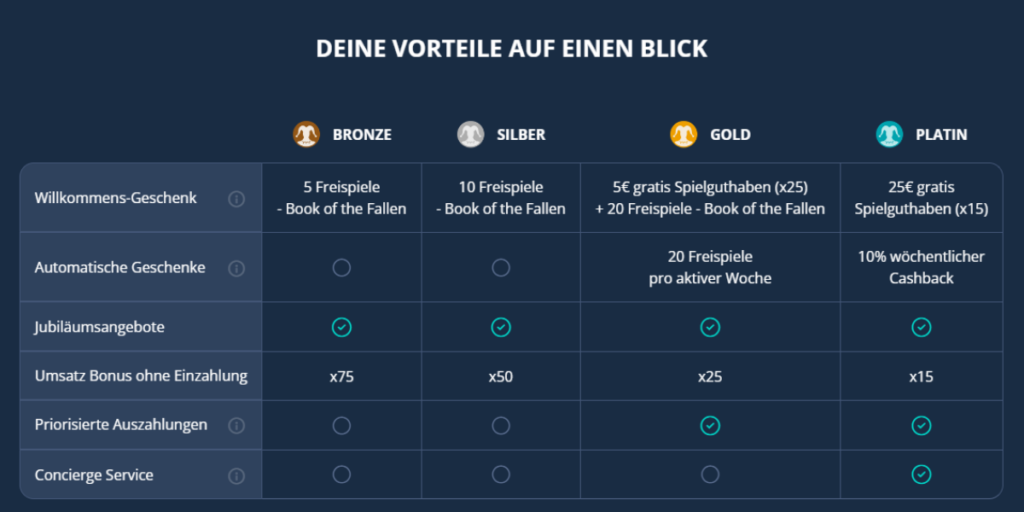
Schon ab deiner ersten Einzahlung wirst du ein Mitglied im PlatinClub, dem exklusiven Treueprogramm des Platincasinos. Dein Status wird mit der Zeit immer höher, und damit einhergehend erhältst du mehr und mehr Vorteile. Dies reicht von erweiterten Support-Zeiten über besondere Aktionen bis hin zu den besten Angeboten und Boni.