
Book of Dead ist einer der bekanntesten und beliebtesten Spielautomaten, der von Play’n GO entwickelt wurde. Seit seiner Veröffentlichung im Jahr 2014 hat sich dieser ägyptisch inspirierte Slot schnell zu einem Favoriten vieler Spieler entwickelt. Mit seiner Mischung aus klassischen Slot-Elementen und modernen Features bietet Book of Dead eine aufregende Spielerfahrung, die sowohl Einsteiger als auch erfahrene Spieler gleichermaßen anspricht. In diesem ausführlichen Review erfährst du alles über die Funktionen, das Gameplay, die Bonusfeatures und die Gewinnmöglichkeiten dieses legendären Spielautomaten.
Hier kannst Du Book of Dead spielen
Du möchtest Book of Dead online spielen? Dann haben wir hier starke Online Casinos, die den Slot anbieten:
[ninja_tables id=“12710″]
Thematik und Design
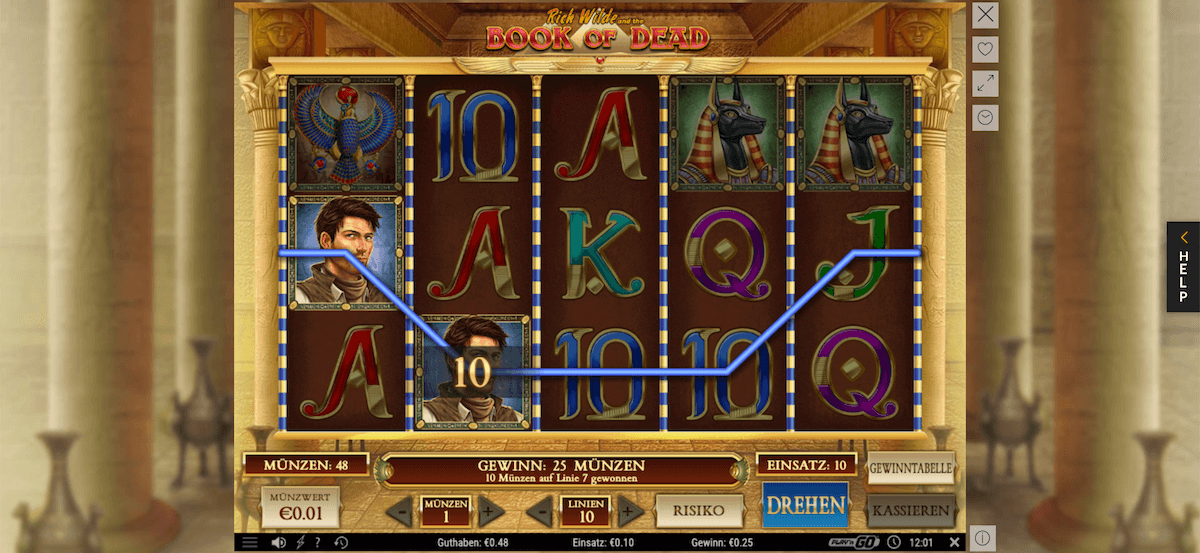
Book of Dead entführt die Spieler in das alte Ägypten, wo sie zusammen mit dem Abenteurer Rich Wilde nach versteckten Schätzen suchen. Das Thema ist stark von ägyptischer Mythologie und Geschichte inspiriert, was in den Symbolen und der allgemeinen Ästhetik des Spiels zum Ausdruck kommt. Zu den Symbolen gehören typische ägyptische Bilder wie Pharaonen, Anubis und Horus, sowie das legendäre Buch der Toten, das eine zentrale Rolle im Spiel spielt.
Grafisch beeindruckt Book of Dead durch klare, detaillierte Symbole und ein stimmiges ägyptisches Setting. Im Hintergrund der Walzen sieht man die Säulen eines antiken Tempels, während die stimmungsvolle Musik und die Soundeffekte für die richtige Atmosphäre sorgen.

Aufbau des Spiels
Book of Dead ist ein 5-Walzen-Slot mit 10 Gewinnlinien, was eine einfache und dennoch effektive Struktur bietet. Spieler haben die Möglichkeit, die Anzahl der aktiven Gewinnlinien anzupassen, was Flexibilität bei den Einsätzen bietet. Die Walzen sind mit verschiedenen Symbolen besetzt, von niedrigeren Werten (Kartensymbole 10, J, Q, K, A) bis hin zu höherwertigen Symbolen wie Rich Wilde selbst und den ägyptischen Göttern.
Die wichtigsten Merkmale des Aufbaus sind:
- Walzen: 5
- Gewinnlinien: Bis zu 10, anpassbar
- Mindest-/Maximaleinsatz: Der Einsatzbereich reicht von kleinen Einsätzen (ab 0,10 Euro pro Dreh) bis hin zu hohen Einsätzen (bis zu 100 Euro pro Dreh).
- Maximale Auszahlung: Der maximale Gewinn beträgt das 5.000-fache des Einsatzes, was bei maximalem Einsatz extrem lukrativ sein kann.
RTP (Return to Player) und Volatilität
Book of Dead hat einen RTP (Return to Player) von 96,21 %, was in der Welt der Online-Slots als durchschnittlich bis gut gilt. Der RTP gibt an, wie viel Prozent der Einsätze theoretisch langfristig an die Spieler zurückfließen. Es ist jedoch wichtig zu verstehen, dass dies ein Durchschnittswert ist und nicht garantiert, dass jeder Spieler diesen Betrag zurückerhält.
Der Slot ist bekannt für seine hohe Volatilität, was bedeutet, dass die Gewinne seltener, aber tendenziell größer ausfallen. Diese Art von Spiel spricht Spieler an, die bereit sind, ein höheres Risiko einzugehen, um größere Gewinne zu erzielen. Während längere Phasen ohne Gewinne möglich sind, kann ein gut getimter großer Gewinn die Verluste schnell ausgleichen und zu einem beeindruckenden Auszahlungsergebnis führen.
Symbole und ihre Werte
Die Symbole in Book of Dead spiegeln die ägyptische Thematik wider und haben unterschiedliche Auszahlungswerte. Hier sind die wichtigsten Symbole und ihre potenziellen Auszahlungen:
- Rich Wilde: Das Hauptsymbol des Spiels ist Rich Wilde, der bis zu das 5000-fache des Einsatzes auszahlen kann, wenn er fünfmal auf einer Gewinnlinie erscheint.
- Pharao/Anubis/Horus: Diese drei Symbole bieten hohe Auszahlungen, wenn sie dreimal oder öfter auf den Walzen erscheinen. Der Pharao kann bis zu das 2.000-fache des Einsatzes zahlen.
- Kartensymbole: Die niedrigeren Symbole bestehen aus den klassischen Kartensymbolen 10, J, Q, K und A. Diese zahlen im Vergleich weniger, bieten jedoch häufiger Gewinne.
Das Buch der Toten – Scatter und Wild zugleich
Das Book of Dead selbst ist das wichtigste Symbol des Spiels, da es sowohl als Wild- als auch als Scatter-Symbol fungiert. Hier sind die beiden Funktionen im Detail:
- Wild-Symbol: Als Wild ersetzt das Buch alle anderen Symbole auf den Walzen, um Gewinnkombinationen zu vervollständigen. Dies erhöht deine Chancen auf Gewinne erheblich.
- Scatter-Symbol: Als Scatter löst das Buch die begehrten Freispiele aus, wenn es mindestens dreimal irgendwo auf den Walzen erscheint. Bei drei oder mehr Büchern werden 10 Freispiele aktiviert.
Freispiele und Bonusfeatures
Die Freispiele in Book of Dead sind das Herzstück des Spiels und bieten das größte Potenzial für hohe Gewinne. Wenn du es schaffst, drei oder mehr Scatter-Symbole (Buch der Toten) zu landen, werden die Freispiele aktiviert. Hier sind die wichtigsten Details zu den Freispielen:
- Expandierende Symbole: Bevor die Freispiele beginnen, wird zufällig ein Symbol ausgewählt, das während der Freispiele expandiert. Dieses spezielle Symbol breitet sich über die gesamte Walze aus, wenn es erscheint, und kann dir massive Gewinne bescheren – besonders wenn es sich um ein hochwertiges Symbol wie Rich Wilde handelt.
- Re-Trigger-Funktion: Wenn du während der Freispiele erneut drei oder mehr Scatter triffst, werden weitere Freispiele ausgelöst. Es gibt keine Begrenzung, wie oft die Freispiele erneut aktiviert werden können, was das Potenzial für außergewöhnlich hohe Gewinne enorm erhöht.
Maximaler Gewinn
Book of Dead ist bekannt für seine hohe Gewinnmöglichkeit. Der maximale Gewinn, den du in einem einzigen Dreh erzielen kannst, beträgt das 5.000-fache deines Einsatzes. Dies macht den Slot besonders attraktiv für Spieler, die nach hohen Gewinnchancen suchen.
Spielerfahrung und Fazit
Book of Dead bietet ein klassisches, aber spannendes Slot-Erlebnis, das durch seine hohe Volatilität und die potenziell lukrativen Freispiele besticht. Die Kombination aus ägyptischer Mythologie, beeindruckender Grafik und großem Gewinnpotenzial macht den Slot besonders für risikobereite Spieler attraktiv. Durch die Anpassbarkeit der Einsätze eignet sich Book of Dead jedoch auch für Gelegenheitsspieler, die mit geringeren Einsätzen spielen möchten.
Die Freispiele mit den expandierenden Symbolen sorgen für Nervenkitzel und sind das Highlight des Spiels, da hier die größten Gewinne erzielt werden können. Mit einem ansprechenden Design und der Chance, das 5.000-fache deines Einsatzes zu gewinnen, bleibt Book of Dead ein Dauerbrenner in der Welt der Online-Slots und verdient seine Position als einer der Top-Spielautomaten in vielen Online-Casinos.
Wenn du nach einem Spiel suchst, das sowohl Spannung als auch große Gewinnchancen bietet, solltest du Book of Dead definitiv ausprobieren.
Kostenlos spielen? Kein Problem
Selbstverständlich kannst du hier Book of Dead auch kostenlos spielen: